
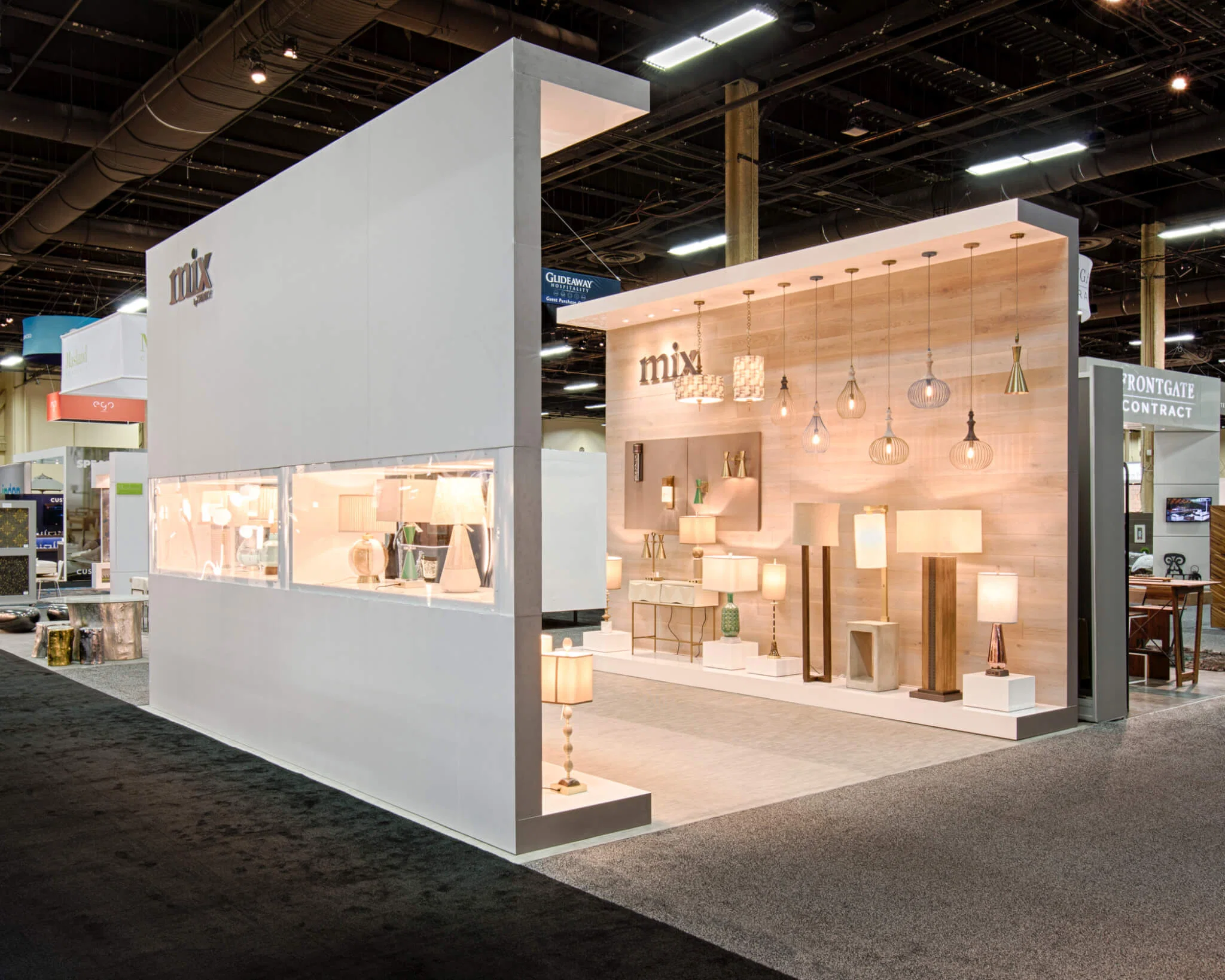
General contractor work is about authority: who controls the room, which deadlines govern exhibitors, and how the official service structure shapes everything from freight to labor to utilities — General Contractor Services.
The section should sound like command of the room's rule system, not like a general management essay about keeping a project organized — the services.
That makes this service fundamentally different from trade show management, which is about client-side decision discipline rather than official floor authority — the services.
Execution priorities for General Contractor Services
- Lead with room authority and exhibitor rules — General Contractor Services.
- Keep deadlines, service desks, and official permissions visible — General Contractor Services.
- Treat the section like contractor-side floor control, not client-side project management — General Contractor Services.
West Palm Beach as a trade show city
Trade shows in West Palm Beach move fast. Major venues book out months in advance, freight windows run tight, and the exhibitors who win their weeks are the ones who arrive with a plan already in hand.
Exhibitors pulling back on budget in West Palm Beach still have to show up in the same booth neighborhoods as their competitors. Scope gets tighter; standards don't. The booths that land well are the ones built on a specific plan, not a generic template.
it connects directly to the 400-room Hilton West Palm Beach and sits within a short stroll of more than 1,200 guest rooms — a useful reference point when sizing a project.
West Palm Beach convention venues and meeting properties
The building matters more than almost anything else in a trade show plan. A few West Palm Beach venues carry most of the calendar.
Across the West Palm Beach venue set, what changes between buildings are the labor model, the rigging approval path, the drayage setup, and the published move-in window. The plan has to match the specific building.
Meyer Amphitheatre is one of the anchors. It is especially relevant for sponsorship-heavy programs that want a civic setting rather than a private ballroom.
Why Trade Show Services of West Palm Beach
Trade Show Services of West Palm Beach operates out of West Palm Beach with a full in-house production shop. Custom fabrication, rental inventory, graphics production, and show-site labor live under one roof.
Local fabrication means real-time problem-solving. A graphic that needs to be reprinted at 6 a.m. On install day is a same-morning fix, not a three-day shipping delay.
Consistency across show dates is the other reason to hire local. The same crew that built the booth runs the install, knows the pack-out, and catches the small things — a missing hardware pack, a graphic edge that needs reseating, a storage crate routed to the wrong bay — without needing the client team to intervene.
West Palm Beach labor and venue services
Most of what goes wrong on a West Palm Beach install traces back to assumptions about labor. Staying inside the venue's published rules for the specific show prevents it.
The workable version of West Palm Beach labor planning is boring on purpose: read the manual, match the scope to its categories, order what the venue sells directly, and schedule everything else around its posted windows. Surprises almost always trace back to a step someone skipped.
The convention center publicly markets itself as a non-union facility while still centralizing utilities, parking, rigging, and preferred AV through venue-side service structures.
The main West Palm Beach event areas
Palm Beach Gardens, North Palm Beach, Juno Beach, Jupiter form the North County Meetings Cluster.
Palm Beach Island and Oceanfront Resorts — Palm Beach, Lake Worth Beach, Singer Island — is a different environment. Oceanfront resort inventory on Palm Beach island and Singer Island drives incentive, hospitality, and executive-meeting demand with a much more premium event profile than the downtown convention stack.
Line items on a typical project
A full engagement covers scope development, fabrication or rental, graphics, show services, logistics, and on-site execution from move-in through dismantle.
What shows up in most budgets: structure, graphics, AV, show-service orders through the venue, labor, freight, supervision days, and closeout. Individual projects layer or remove items based on scope.
Good execution comes from keeping the team small and the handoffs short. Every extra vendor in the chain adds a communication layer and a place where details get lost.
Multi-show programs add asset management: storage, refurbishment, graphic swaps, and scheduled re-kitting so the booth rolls cleanly from West Palm Beach to the next city on the calendar.
Out of scope by default are show organizer fees, booth lease costs paid directly to the show, staff travel and per diems, and any custom software or data-capture tooling the client runs on its own stack. Those stay on the client side and plug into the project through coordination, not rebilling.
The process from start to finish
First step on any project is pinning down the show, the floor plan, the deadlines, and what success actually looks like. Everything downstream hinges on those answers.
Once scope is clear, the venue work begins. Exhibitor manual, dock times, utility order IDs, rigging submissions for hanging elements, and labor calls all get locked against the venue's actual rules.
Production covers fabrication, graphics, AV spec, rentals, and crew chief assignment. It is the longest phase of most projects and the one where timelines are either protected or lost.
The install phase has one owner on the floor. That person handles the labor calls, the graphics questions, the sequence adjustments, and the daily update.
Show-hours coverage is part of every engagement — not a premium add-on. On-floor support keeps the booth running while the client team runs the pipeline.
Strike and closeout happen the same day. Storage labels, outbound manifests, vendor performance notes, and a written debrief go out within 24 hours of doors closing.
Cost and lead time
An honest quote itemizes the variables. There is not a single price — there is a configuration.
Six variables drive the cost: custom versus rental, booth footprint and complexity, venue-specific labor and rigging fees, graphics scope and substrate, freight distance and timing, and the number of on-site supervision days.
A clean schedule starts 4 to 5 months out for custom work and 2 to 3 months for rentals. Shorter lead times are workable but push rush premiums and limit material choices.
Outcomes we optimize for
A project runs well when install clears the venue's published window, all show services land as ordered, the booth performs across every show day without pulling the client team off pipeline work, and strike clears the dock before the next occupant loads in.
Most programs in West Palm Beach are evaluated on lead-capture volume, meetings booked on the floor, and qualified-pipeline attribution after the show. The booth is a means to those numbers — it is not the number itself.
Client teams sometimes want the booth to carry the pipeline on its own, but the best-performing programs treat the booth as a platform and put real operators on it. On-floor conversation discipline moves the KPIs more than any scenic decision.
What clients usually ask about General Contractor Services
Do you work at Roger Dean Chevrolet Stadium?
Yes. Spring training stadium in Jupiter that doubles as a corporate event and hospitality venue with field-level event spaces, luxury suites, and club areas.
How does labor work in West Palm Beach?
It runs venue by venue. The South Florida Fairgrounds publicly routes planners through facilities, equipment, event personnel, and inquiry sections, which points to venue-managed operational workflows rather than blanket outside-vendor assumptions.
How much lead time is ideal?
Custom builds run best with 16 to 20 weeks of lead time. Rentals take 8 to 12 weeks.
What information kicks off a project?
The show, the venue, the booth number, the dates, and a target budget range. From those, an initial scope and a realistic cost come back within a few days.
Who runs the booth on-site?
One named show-site lead runs the install, the show hours, and the strike. That person carries the floor plan and the punch list from crates to doors and reports up once a day.
Can the booth travel to the next city on our calendar?
Same structure, swappable graphics, standard crates.
What happens if something breaks during show hours?
The on-site lead handles it.